
Map_thumbnail_large_font

Rigidipenna inexpectata

Status_ne_offStatus_dd_offStatus_lc_offStatus_nt_onStatus_vu_offStatus_en_offStatus_cr_offStatus_ew_offStatus_ex_off

Taxonomy [top]

Kingdom Phylum Class Order Family
ANIMALIA CHORDATA AVES CAPRIMULGIFORMES PODARGIDAE

Scientific Name: Rigidipenna inexpectata
Species Authority: E. Hartert, 1901
Common Name/s:
English Solomon Islands Frogmouth
Taxonomic Notes: Podargus ocellatus (Sibley and Monroe 1990, 1993) has been split into P. ocellatus and Rigidipenna inexpectata following Cleere et al. (2007).

Assessment Information [top]

Red List Category & Criteria: Near Threatened ver 3.1
Year Published: 2012
Assessor/s: BirdLife International
Reviewer/s: Butchart, S. & Symes, A.
Contributor/s: Dutson, G.
Justification:
This species has a small range in which the area, extent and quality of habitat are in decline, with a corresponding decline in the population suspected as a result. However, its population is not severely fragmented and it occurs at more than 10 locations. It is therefore listed as Near Threatened.

History:
2011 Near Threatened
2010 Least Concern
2008 Not Recognized
2004 Not Recognized
2000 Not Recognized
1994 Not Recognized
1988 Not Recognized

Geographic Range [top]

Range Description: Rigidipenna inexpectata is endemic to the Solomon Islands, having been recorded on Bougainville, Choiseul, Santa Isabel and San Jorge, and recently reported from Buka (Hadden 2004, Cleere et al. 2007).

Countries:
Native:
Solomon Islands
Range Map: Click here to open the map viewer and explore range.

Population [top]

Population: The species's population size has not been formally estimated, but, given the paucity of records, a realistic preliminary estimate may be of 2,500-9,999 individuals (G . Dutson in litt. 2011). This equates to 1,667-6,666 mature individuals, rounded here to 1,500-7,000 mature individuals.
Population Trend: Decreasing

Habitat and Ecology [top]

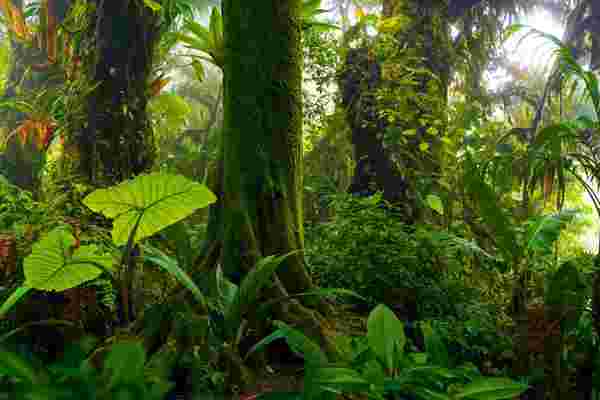
Habitat and Ecology: The species is found in primary forest, secondary growth and gardens, from sea-level to at least 700 m (Cleere et al. 2007, G. Dutson in litt. 2011). It probably feeds mainly on large insects (Holyoak 2001). One nest was found in the horizontal fork of a branch in the canopy of a tall tree, c.25 m from the ground, and was a shallow structure built with sticks (Schodde 1977 in Cleere et al. 2007).

Systems: Terrestrial

Threats [top]

Major Threat(s): It probably experiences some habitat loss and degradation through clearing for agriculture and timber extraction, but the population is not thought to be in rapid decline (G. Dutson in litt. 2011). The annual rate of forest loss on the Solomon Islands was 0.24% in 1990-2005 and 0.25% in 2005-2010, equating to a loss of c.4.8% over 20 years (FAO 2010). Furthermore, the species has been recorded in altered habitats such as logged forest, regrowth and gardens (G. Dutson in litt. 2011).

Conservation Actions [top]

Conservation Actions: Conservation Actions Underway
None is known.

Conservation Actions Proposed
Carry out targeted surveys to obtain a population estimate. Monitor the population and the extent and condition of the species's habitats. Increase the area of suitable habitat that is protected. Conduct further research into the species's ecology and life history.

Citation: BirdLife International 2012. Rigidipenna inexpectata. In: IUCN 2012. IUCN Red List of Threatened Species. Version 2012.2. <www.iucnredlist.org>. Downloaded on 24 May 2013.
Disclaimer: To make use of this information, please check the <Terms of Use>.
Feedback: If you see any errors or have any questions or suggestions on what is shown on this page, please fill in the feedback form so that we can correct or extend the information provided