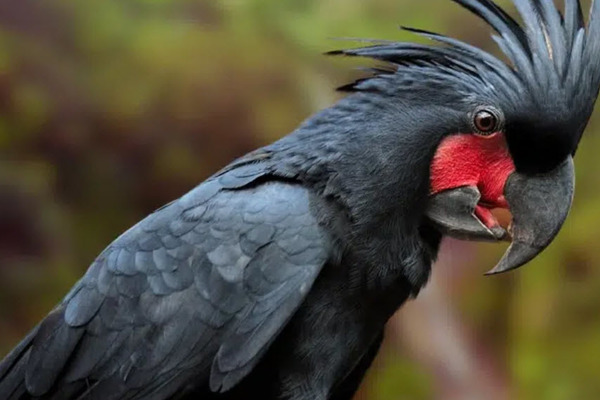




| Kingdom | Phylum | Class | Order | Family |
|---|---|---|---|---|
| ANIMALIA | CHORDATA | AVES | PSITTACIFORMES | PSITTACIDAE |
| Scientific Name: | Cacatua ophthalmica | |||
| Species Authority: | Sclater, 1864 | |||
Common Name/s:
|
||||
| Red List Category & Criteria: | Vulnerable A2cd+3cd+4cd ver 3.1 | ||||||
| Year Published: | 2012 | ||||||
| Assessor/s: | BirdLife International | ||||||
| Reviewer/s: | Butchart, S. & Symes, A. | ||||||
| Contributor/s: | Beehler, B., Bishop, K., Dutson, G. & Wilkinson, R. | ||||||
|
Justification: This species is listed as Vulnerable because remote-sensing techniques indicate that the lowland forest on which this species depends for nesting is being cleared at such a rate that the population is likely to be undergoing a rapid decline. |
|||||||
| History: |
|
||||||
| Range Description: | Cacatua ophthalmica is endemic to New Britain, Papua New Guinea, where it is widespread in suitable habitat. It is usually encountered in pairs, but birds may congregate in flocks of up to 40 individuals. Although the species may still appear to be relatively numerous, it is long-lived and declines in reproductive output due to deforestation may be masked. |
| Countries: | Native: Papua New Guinea |
| Range Map: | Click here to open the map viewer and explore range. |
| Population: | The population is estimated to number at least 10,000 mature individuals, roughly equivalent to 15,000 individuals in total. |
| Population Trend: |
Decreasing
|
| Habitat and Ecology: | It inhabits tropical lowland rainforest up to an altitude of 1000 m. Although it occurs in disturbed forest including degraded forest and gardens, it presumably relies on intact forest with large trees for nesting (Dutson 2011). |
| Systems: | Terrestrial |
| Major Threat(s): | Rapid conversion of lowland forest to oil plantations over the last thirty years is likely to have caused a significant loss of breeding habitat. Although it is rare in the international trade, even limited trapping would be a cause for concern. |
| Conservation Actions: |
Conservation Actions Underway CITES II. Conservation Actions Proposed Monitor populations and breeding success in logged and unlogged forest throughout its range. Ensure the protection of a number of large areas of lowland forest on New Britain as part of a protected area network for the island. Monitor trends in the national and international trade of this species. Conduct awareness campaigns to discourage trapping of the species. Discourage the logging of trees with holes or other suitable nesting cavities. |
| Citation: | BirdLife International 2012. Cacatua ophthalmica. In: IUCN 2012. IUCN Red List of Threatened Species. Version 2012.2. <www.iucnredlist.org>. Downloaded on 25 May 2013. |
| Disclaimer: | To make use of this information, please check the <Terms of Use>. |
| Feedback: | If you see any errors or have any questions or suggestions on what is shown on this page, please fill in the feedback form so that we can correct or extend the information provided |