

Periporphyrus erythromelas
| Kingdom |
Phylum |
Class |
Order |
Family |
| ANIMALIA |
CHORDATA |
AVES |
PASSERIFORMES |
CARDINALIDAE |
| Scientific Name: |
Periporphyrus erythromelas |
| Species Authority: |
(Gmelin, 1789) |
Common Name/s:
| English |
– |
Red-and-black Grosbeak |
|
Assessment Information
[top]
| Red List Category & Criteria: |
Near Threatened
ver 3.1
|
| Year Published: |
2012 |
| Assessor/s: |
BirdLife International |
| Reviewer/s: |
Butchart, S. & Symes, A. |
| Contributor/s: |
|
Justification:
Based on a model of future deforestation in the Amazon basin, and its susceptibility to fragmentation and disturbance, it is suspected that the population of this species will decline by 25-30% over the next three generations, and it has therefore been uplisted to Near Threatened.
|
| History: |
| 2009 |
– |
Least Concern
|
| 2008 |
– |
Least Concern
|
| 2004 |
– |
Least Concern
|
|
Geographic Range
[top]
| Range Description: |
Extreme E Venezuela, N & C Guyana, Suriname (except SW), French Guiana and Brazil from Amapá south to E Pará (del Hoyo et al 2011) and west across S. Amazonian Brazil into the Madeira drainage (A. Lees in litt. 2011). |
| Countries: |
Native: Brazil; French Guiana; Guyana; Suriname; Venezuela |
| Range Map: |
Click here to open the map viewer and explore range. |
Population
[top]
| Population: |
The global population size has not been quantified, but this species is described as 'uncommon and patchily distributed' (Stotz et al. 1996).
|
| Population Trend: |
Unknown
|
Habitat and Ecology
[top]
| Habitat and Ecology: |
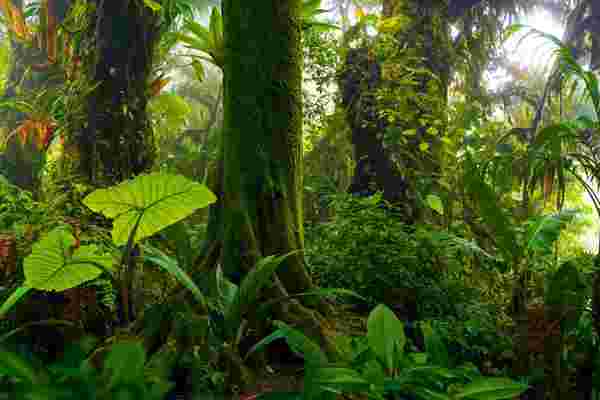
Found in the lower levels of pristine mature lowland humid forest, terre firme, and seasonally flooded forest. Occasionally into subcanopy but does not appear to join mixed-species flocks. Recorded from sea level to 1000m. Occurs at low density and does not appear to adapt to human habitat modifications, though the species has been recorded in selectively logged forest (A. Lees in litt. 2011). Appar
|
| Systems: |
Terrestrial |
| Major Threat(s): |
Projected deforestation is the primary threat affecting this species (Soares-Filho et al. 2006, Bird et al. 2011). It requires near pristine forest (del Hoyo et al. 1992) and so is especially sensitive to fragmentation and disturbance, particularly as it is already rare and occurs at low densities. Proposed changes to the Brazilian Forest Code reduce the percentage of land a private landowner is legally required to maintain as forest (including, critically, a reduction in the width of forest buffers alongside perennial steams) and include an amnesty for landowners who deforested before July 2008 (who would subsequently be absolved of the need to reforest illegally cleared land) (Bird et al. 2011).
|
Conservation Actions
[top]
| Conservation Actions: |
Conservation Actions Underway None is known. Conservation Actions Proposed Expand the protected area network to effectively protect IBAs. Effectively resource and manage existing and new protected areas, utilising emerging opportunities to finance protected area management with the joint aims of reducing carbon emissions and maximizing biodiversity conservation. Conservation on private lands, through expanding market pressures for sound land management and preventing forest clearance on lands unsuitable for agriculture, is also essential (Soares-Filho et al. 2006). Campaign against proposed changes to the Brazilian Forest Code that would lead to a decrease in the width of the areas of riverine forest protected as Permanent Preservation Areas (APPs), which function as vital corridors in fragmented landscapes.
|