

Map_thumbnail_large_font

Herpsilochmus motacilloides

Status_ne_offStatus_dd_offStatus_lc_offStatus_nt_onStatus_vu_offStatus_en_offStatus_cr_offStatus_ew_offStatus_ex_off

Taxonomy [top]

Kingdom Phylum Class Order Family
ANIMALIA CHORDATA AVES PASSERIFORMES THAMNOPHILIDAE

Scientific Name: Herpsilochmus motacilloides
Species Authority: Taczanowski, 1874
Common Name/s:
English Creamy-bellied Antwren

Assessment Information [top]

Red List Category & Criteria: Near Threatened ver 3.1
Year Published: 2012
Assessor/s: BirdLife International
Reviewer/s: Butchart, S. & Taylor, J.
Contributor/s: Lees, A.
Justification:

Based on a model of future deforestation in the Amazon basin, it is suspected that the population of this species will decline by 25-30% over the next three generations, and it has therefore been uplisted to Near Threatened.

History:
2009 Least Concern
2008 Least Concern
2004 Least Concern

Geographic Range [top]

Range Description: Herpsilochmus motacilloides is endemic to the eastern Andes of Peru. It ranges from Huánuco southwards to Cuzco, and is considered fairly common (del Hoyo et al. 2003).
Countries:
Native:
Peru
Range Map: Click here to open the map viewer and explore range.

Population [top]

Population: The global population size has not been quantified, but this species is described as 'fairly common but patchily distributed' (Stotz et al. 1996).
Population Trend: Decreasing

Habitat and Ecology [top]

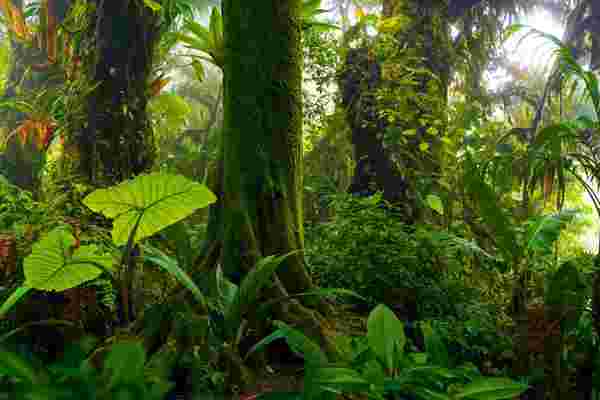
Habitat and Ecology: This is a canopy and subcanopy species of humid montane forest, ranging from 1,000-2,500 m. It prefers dense, tall evergreen forest, with heavy moss and epiphytic growth on the trees (del Hoyo et al. 2003).
Systems: Terrestrial

Threats [top]

Major Threat(s):

The primary threat to this species is accelerating deforestation in the Amazon basin as land is cleared for cattle ranching and soy production, facilitated by expansion of the road network (del Hoyo et al. 2003, Soares-Filho et al. 2006, Bird et al. 2011). The species is considered highly sensitive to human disturbance, and as such is likely to suffer strong effects from forest fragmentation (del Hoyo et al. 2003, A. Lees in litt. 2011).

Conservation Actions [top]

Conservation Actions:

Conservation Actions Underway
None is known.

Conservation Actions Proposed

Expand the protected area network to effectively protect IBAs. Effectively resource and manage existing and new protected areas, utilising emerging opportunities to finance protected area management with the joint aims of reducing carbon emissions and maximizing biodiversity conservation. Conservation on private lands, through expanding market pressures for sound land management and preventing forest clearance on lands unsuitable for agriculture, is also essential (Soares-Filho et al. 2006).
Citation: BirdLife International 2012. Herpsilochmus motacilloides. In: IUCN 2012. IUCN Red List of Threatened Species. Version 2012.2. <www.iucnredlist.org>. Downloaded on 19 May 2013.
Disclaimer: To make use of this information, please check the <Terms of Use>.
Feedback: If you see any errors or have any questions or suggestions on what is shown on this page, please fill in the feedback form so that we can correct or extend the information provided