



| Kingdom | Phylum | Class | Order | Family |
|---|---|---|---|---|
| ANIMALIA | CHORDATA | AVES | FALCONIFORMES | ACCIPITRIDAE |
| Scientific Name: | Henicopernis infuscatus | ||||||
| Species Authority: | Gurney, 1882 | ||||||
Common Name/s:
|
|||||||
| Red List Category & Criteria: | Vulnerable A2cd+3cd+4cd;C1+2a(ii) ver 3.1 | |||||||||
| Year Published: | 2012 | |||||||||
| Assessor/s: | BirdLife International | |||||||||
| Reviewer/s: | Butchart, S. & Symes, A. | |||||||||
| Contributor/s: | Beehler, B., Bishop, K., Dutson, G., Finch, D., Gregory, P., Pilgrim, J. & Wilkinson, R. | |||||||||
|
Justification: This species is considered Vulnerable on the basis of a small estimated population which is suspected to be declining rapidly through rampant lowland forest loss, owing primarily to conversion to oil palm. However, basic biological data on the species, and an assessment of its tolerance of logged forest, is urgently needed to further inform this assessment. |
||||||||||
| History: |
|
|||||||||
| Range Description: | Henicopernis infuscatus is a little-known endemic of New Britain (including Lolobau) in Papua New Guinea. There are only c.30 recent records, all of singles or pairs (Coates 1985, Clay 1994, K. D. Bishop in litt. 1994, B. Finch in litt. 1994, Hornbuckle 1999a, J. Pilgrim in litt. 1999). As a large raptor, it is believed to occur at low population densities and it appears to be much less common than the allospecific New Guinea Long-tailed Buzzard H. longicauda (B. Finch in litt. 1994, K. D. Bishop in litt. 1994, G. Dutson pers. obs. 1997-1998, P. Gregory in litt. 1999). However, it is an inconspicuous forest species which is probably widespread and is likely to be very under-recorded (G. Dutson pers. obs. 1997-1998, Dutson 2011). |
| Countries: | Native: Papua New Guinea |
| Range Map: | Click here to open the map viewer and explore range. |
| Population: | The population is estimated to number 10,000-19,999 individuals based on an assessment of known records, descriptions of abundance and range size (Buchanan et al. 2008, Dutson in litt. 2012). This is consistent with recorded population density estimates for congeners or close relatives with a similar body size, and the fact that only a proportion of the estimated Extent of Occurrence is likely to be occupied. This equates to 6,667-13,333 mature individuals, rounded here to 6,000-15,000 mature individuals. |
| Population Trend: |
Decreasing
|
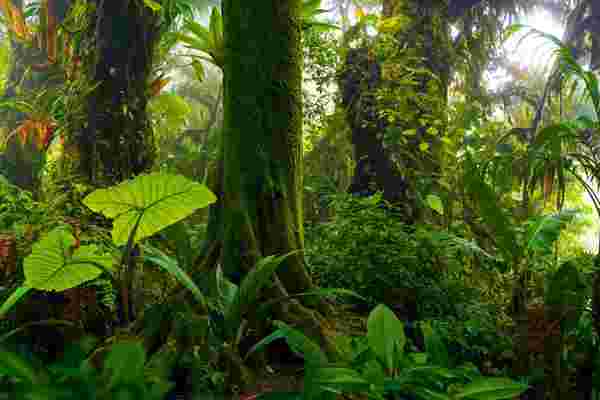
| Habitat and Ecology: | It is usually recorded gliding over primary hill forest to a maximum of 1,300 m (K. D. Bishop in litt. 1994). There are few records from logged or otherwise degraded forest, but its habitat requirements are poorly known (K. D. Bishop in litt. 1994, Clay 1994, B. Finch in litt. 1994). Its feeding ecology may be similar to that of H. longicauda which hunts above or within the canopy for arthropods, lizards, birds and birds' eggs (Coates 1985). |
| Systems: | Terrestrial |
| Major Threat(s): | Nearly all lowland and hill forests on gentle gradients on New Britain have been logged or are under logging concessions, and large areas have been subsequently converted to oil-palm plantations (K. D. Bishop in litt. 1994, G. Dutson pers. obs. 1997-1998, P. Gregory in litt. 1999, Buchanan et al. 2008). However, much of this species's habitat is on steep slopes and montane forest which is not suitable for logging (Clay 1994, G. Dutson pers. obs. 1997-1998). These striking birds are likely to be shot opportunistically as trophies and for meat (K. D. Bishop in litt. 1994). Hunting has rendered H. longicauda scarce in some areas of New Guinea (Coates 1985). |
| Conservation Actions: |
Conservation Actions Underway CITES Appendix II. No conservation measures are known. Conservation Actions Proposed Determine best survey techniques. Survey status in logged forest. Employ local hunters to find nests for intensive observation. Assess levels of hunting through interviewing local hunters. Interview local villagers about population trends. Map remaining forest and logging concessions across New Britain. Lobby for a moratorium on forest clearance for oil-palm plantations. Encourage creation of community-run sustainable logging rather than commercial logging. Encourage creation of large wildlife management areas on New Britain. Address hunting through public awareness discussions. |
| Citation: | BirdLife International 2012. Henicopernis infuscatus. In: IUCN 2012. IUCN Red List of Threatened Species. Version 2012.2. <www.iucnredlist.org>. Downloaded on 25 May 2013. |
| Disclaimer: | To make use of this information, please check the <Terms of Use>. |
| Feedback: | If you see any errors or have any questions or suggestions on what is shown on this page, please fill in the feedback form so that we can correct or extend the information provided |