


| Kingdom | Phylum | Class | Order | Family |
|---|---|---|---|---|
| ANIMALIA | CHORDATA | AVES | GRUIFORMES | RALLIDAE |
| Scientific Name: | Gymnocrex rosenbergii | |||
| Species Authority: | (Schlegel, 1866) | |||
Common Name/s:
|
||||
| Red List Category & Criteria: | Vulnerable C2a(i) ver 3.1 | |||||||||||||||
| Year Published: | 2012 | |||||||||||||||
| Assessor/s: | BirdLife International | |||||||||||||||
| Reviewer/s: | Butchart, S. & Symes, A. | |||||||||||||||
| Contributor/s: | Bishop, K. & O'Brien, T. | |||||||||||||||
|
Justification: This rail qualifies as Vulnerable because it has a small population, which is likely to be undergoing a continuing decline and severe fragmentation owing primarily to habitat loss. However, the few confirmed recent records may in part reflect its reclusive nature and further surveys are needed to clarify its status. |
||||||||||||||||
| History: |
|
|||||||||||||||
| Range Description: | Gymnocrex rosenbergii is known from Sulawesi and the nearby island of Peleng, Indonesia (BirdLife International 2001). Specimen records and sightings suggest that it is relatively widely distributed and locally fairly common. However, it appears to have declined, and has probably disappeared from much of the Minahasa peninsula, and indeed lowland Sulawesi. Recent records derive from few localities, suggesting that it is now rare and local, although its retiring habits undoubtedly result in it being under-recorded. Its current status on Peleng (where it is known from just three specimens) is unknown. |
| Countries: | Native: Indonesia |
| Range Map: | Click here to open the map viewer and explore range. |
| Population: | The population is estimated to number 2,500-9,999 mature individuals based on an assessment of known records, descriptions of abundance and range size. This is consistent with recorded population density estimates for congeners or close relatives with a similar body size, and the fact that only a proportion of the estimated Extent of Occurrence is likely to be occupied. This estimate is equivalent to 3,750-14,999 individuals, rounded here to 3,500-15,000 individuals. |
| Population Trend: |
Decreasing
|
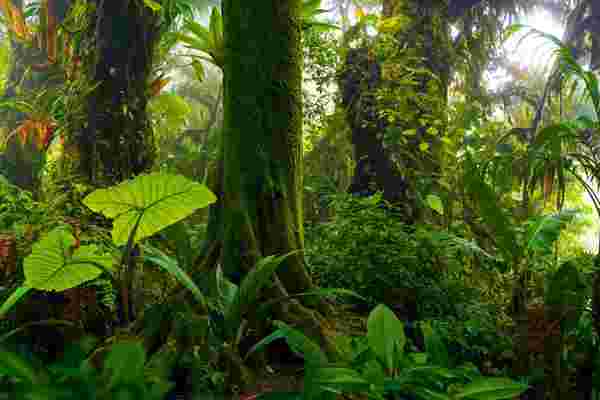
| Habitat and Ecology: | It inhabits dense primary and old secondary tropical evergreen (sometimes relatively dry) forest, usually between 150 and 900 m. However, recent records from c.1,700 m suggest that its altitudinal range is broad. Records indicate a preference for thick understorey (comprising small saplings, palms, rattans and bamboos), forest streams and pools. It has also been encountered in dense, low forest/shrub regrowth on recently abandoned rice-fields. It is a very poor flier, and is therefore presumably largely sedentary. Its call is potentially a significant aid to detection. |
| Systems: | Terrestrial; Freshwater |
| Major Threat(s): | The impact of extensive lowland deforestation on Sulawesi, as a result of land clearance for transmigration settlements, agricultural and infrastructure development and large-scale logging, is unclear. However, habitat destruction, degradation and fragmentation certainly pose the main threats to the species. In Indonesia new regional autonomy laws were passed in 1999 (and enacted in early 2000), which empower regional governments to determine the licensing of forest concessions and exploitation of natural resources. Unfortunately there has also been a significant increase in the amount of logging taking place in protected areas since decentralisation, especially in Sulawesi. The harvesting of rattan in the lower elevations of Lore Lindu National Park may be impacting the species (K. D. Bishop in litt. 2012). Its near flightlessness renders it vulnerable to predation, particularly by introduced predators (e.g. dogs), and hunting (using snares) may pose a local threat. |
| Conservation Actions: |
Conservation Actions Underway It is known to occur in five protected areas, Bogani Nani Wartabone, Lore Lindu and Rawa Aopa Watumohai National Parks, Gunung Klabat, Pengunungan Palu and Tangkoko DuaSudara and Gunung Ambang Nature Reserves (BirdLife International 2001, N. Brickle per T. O'Brien in litt. 2007); however, in recent years deforestation has continued both within and adjacent to protected areas in northern Sulawesi (T. O'Brien in litt. 2007). Conservation Actions Proposed Conduct further surveys for this species (using tape playback of its vocalisations to aid detection), on both Sulawesi and Peleng, to establish its current distribution and status, assess its ecological requirements and identify local threats. Propose further key sites for establishment as strict protected areas. |
| Citation: | BirdLife International 2012. Gymnocrex rosenbergii. In: IUCN 2012. IUCN Red List of Threatened Species. Version 2012.2. <www.iucnredlist.org>. Downloaded on 18 May 2013. |
| Disclaimer: | To make use of this information, please check the <Terms of Use>. |
| Feedback: | If you see any errors or have any questions or suggestions on what is shown on this page, please fill in the feedback form so that we can correct or extend the information provided |