


| Kingdom | Phylum | Class | Order | Family |
|---|---|---|---|---|
| ANIMALIA | CHORDATA | AVES | STRIGIFORMES | TYTONIDAE |
| Scientific Name: | Tyto soumagnei | |||||||||
| Species Authority: | (Milne Edwards, 1878) | |||||||||
Common Name/s:
|
||||||||||
| Red List Category & Criteria: | Vulnerable C2a(i) ver 3.1 | ||||||||||||||||||
| Year Published: | 2012 | ||||||||||||||||||
| Assessor/s: | BirdLife International | ||||||||||||||||||
| Reviewer/s: | Butchart, S. & Taylor, J. | ||||||||||||||||||
| Contributor/s: | Deliry, C., Hawkins, F., Mitchell, S., Réné De Roland, L., Safford, R. & Thorstrom, R. | ||||||||||||||||||
|
Justification: This species qualifies as Vulnerable as its population is presumed to be small and declining owing to the destruction and severe fragmentation of its rainforest habitat. |
|||||||||||||||||||
| History: |
|
||||||||||||||||||
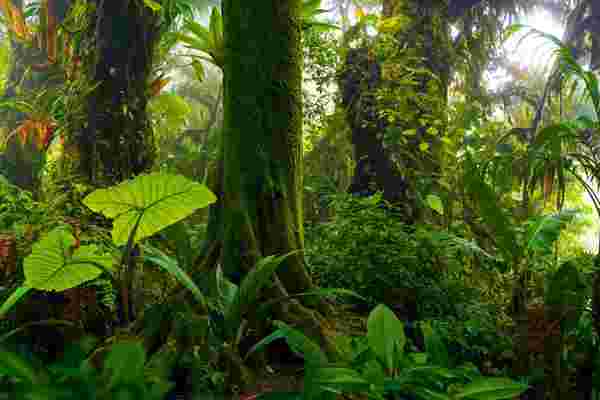
| Range Description: | Tyto soumagnei occurs in the eastern rainforest of Madagascar, where it was formerly known from between Amber Mountain in the far north to Mantadia National Park in the centre-east, before a further site (Kalambatritra) was located 500 km further south of its previously known range (Irwin and Samonds 2002). More recently, the species was found in the extreme south-east of Madagascar, in the lowlands of Tsitongambarika, extending its presumed range considerably (R. Thorstrom and L-A. Rene de Roland in litt. 2007; R. Safford in litt. 2007). It is probably present in all suitably large blocks of humid evergreen forest in the east and north of Madagascar, but its nocturnal habits make it difficult to detect. Future surveys may reveal it to be less rare than currently thought (Morris and Hawkins 1998; ZICOMA 1999), and has been found to be common at Bemanevika New Protected Area at 1,500-1,650 m (L-A. Rene de Roland in litt. 2012). |
| Countries: | Native: Madagascar |
| Range Map: | Click here to open the map viewer and explore range. |
| Population: | A conservative estimate of primary rainforest cover in Madagascar is c.40,000 km2 so even at 0.1 individuals/km2 a low population estimate would be 4,000 individuals (F. Hawkins in litt. 2009). It is placed in the band 2,500-9,999 mature individuals, equating to 3,750-14,999 individuals, which is rounded to 3,500-15,000 individuals here. |
| Population Trend: |
Decreasing
|
| Habitat and Ecology: | The species occurs in and adjacent to humid evergreen forest from sea level to 2,000 m (Morris and Hawkins 1998; ZICOMA 1999), but has also been recorded in an area dominated by dry deciduous forest (van Esbroeck 2006; Cardiff and Goodman 2008). It hunts at night in somewhat open areas in or near primary forest, perching in trees at the forest edge. Although formerly believed to occur only in undisturbed rainforest (Langrand 1990), it has been recorded in degraded/secondary forest-edge vegetation and also hunts over open, human-altered habitat adjacent to forest, including rice-paddies and slash-and-burn cultivation (Thorstrom and de Roland 1997; Thorstrom et al. 1997), and it may require both forest and open areas (and so may be absent from large areas of forest interior; S. Mitchell in litt. 2009). In Masoala it ranged over 210 ha (Thorstrom et al. 1997). Its diet is predominantly small native mammals, in contrast to T. alba which feeds mostly on introduced rat Rattus species (Goodman and Thorstrom 1998) outside primary forest. Tsingy tufted-tailed rats Eliurus antsingy constituted almost 50% of total prey mass of birds in dry forest at Ankarana (northern Madagascar), and birds here also consumed insects, frogs and geckos (Cardiff and Goodman 2008). Birds have been recorded roosting on rock ledges and in cave entrances (van Esbroeck 2006; Cardiff and Goodman 2008). The first nest recorded by scientists was found in September 1995, 23 m above ground, in a natural tree-cavity in an isolated native tree Weinmannia, 500 m from the edge of the main forest block; clutch-size was probably two (two young successfully fledged) (Thorstrom and de Roland 1997). The species may have been overlooked previously for three reasons: a) it is reclusive and strictly nocturnal; b) it is mistaken for Tyto alba; and c) it occurs patchily and at low densities (Irwin and Samonds 2002; R. Thorstrom and L-A. Rene de Roland in litt. 2007). |
| Systems: | Terrestrial |
| Major Threat(s): | Deforestation, mainly for subsistence slash-and-burn cultivation but also for commercial logging, continues to destroy the species's main evergreen forest habitat. Uncontrolled use of fire, often as a result of poor farming practices, is also a major cause of deforestation. Much of the eastern coastal plain has either already been cleared or is covered by highly degraded forest, remaining habitat is under pressure from the increasing human population (Du Puy and Moat 1996). |
| Conservation Actions: |
Conservation Actions Underway CITES Appendix I and II. Several sites where it has been recorded are protected areas - Mantadia National Park, Marotandrano Special Reserve, Masoala National Park, Montagne d'Ambre National Park, Tsaratanana Strict Reserve and Zahamena National Park - where it probably occurs at low density (ZICOMA 1999). Four individuals are being radio-tracked and monitored at Bemanevika New Protected Area (L-A. Rene de Roland in litt. 2012). Conservation Actions Proposed Establish presence or absence at rainforest sites to the south of Mantadia, especially in Midongy-South, Ranomafana, Andringitra and Andohahela National Parks. Determine its habitat requirements for breeding and foraging, to clarify its population size. Increase the area of suitable habitat that has protected status. |
| Citation: | BirdLife International 2012. Tyto soumagnei. In: IUCN 2012. IUCN Red List of Threatened Species. Version 2012.2. <www.iucnredlist.org>. Downloaded on 23 May 2013. |
| Disclaimer: | To make use of this information, please check the <Terms of Use>. |
| Feedback: | If you see any errors or have any questions or suggestions on what is shown on this page, please fill in the feedback form so that we can correct or extend the information provided |