



| Kingdom | Phylum | Class | Order | Family |
|---|---|---|---|---|
| ANIMALIA | CHORDATA | AVES | APODIFORMES | TROCHILIDAE |
| Scientific Name: | Eupherusa cyanophrys | ||||||
| Species Authority: | Rowley & Orr, 1964 | ||||||
Common Name/s:
|
|||||||
| Red List Category & Criteria: | Endangered B1ab(i,ii,iii,v) ver 3.1 | |||||||||||||||
| Year Published: | 2012 | |||||||||||||||
| Assessor/s: | BirdLife International | |||||||||||||||
| Reviewer/s: | Butchart, S. & Symes, A. | |||||||||||||||
| Contributor/s: | Howell, S. & Navarro, A. | |||||||||||||||
|
Justification: Habitat is probably contiguous between the two areas from which this species is known. The lack of records in these intervening areas is almost certainly indicative of the paucity of field studies. Even including these areas of presumed occurrence, the species has a very small range in which habitat is being lost, and consequently it qualifies as Endangered. |
||||||||||||||||
| History: |
|
|||||||||||||||
| Range Description: | Eupherusa cyanophrys is endemic to the Sierra Miahuatlán, an isolated mountain range in southernmost Oaxaca, Mexico. It has been found in two areas of the sierra, separated by c.60-70 km: in the west along the Puerto Escondido road; and to the east along the Puerto Angel road at its intersection with the río Jalatengo. Appropriate habitat appears widespread along the latter road (Roberson and Carratello 1997), and it was locally common until at least 1997 (S. N. G. Howell in litt. 1998, A. G. Navarro in litt. 1998), but its known range remains highly restricted. |
| Countries: | Native: Mexico |
| Range Map: | Click here to open the map viewer and explore range. |
| Population: | The population is estimated to number 1,000-2,499 individuals based on an assessment of known records, descriptions of abundance and range size. This is consistent with recorded population density estimates for congeners or close relatives with a similar body size, and the fact that only a proportion of the estimated Extent of Occurrence is likely to be occupied. This estimate is equivalent to 667-1,666 mature individuals, rounded here to 600-1,700 mature individuals. |
| Population Trend: |
Decreasing
|
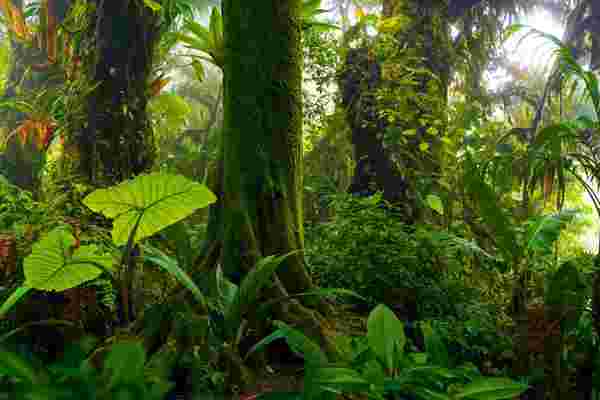
| Habitat and Ecology: | It is primarily restricted to cloud-forest and the upper reaches of tropical semi-deciduous forest at 1,300-1,950 m, occasionally wandering (possibly seasonally) to c.700 m on adjacent mountain slopes. It also occurs up to 2,500 m, but at lower densities (Howell and Webb 1995a). Nesting has been recorded in September-November and May (Howell and Webb 1995a). |
| Systems: | Terrestrial |
| Major Threat(s): | The cloud-forests on the Sierra Miahuatlán were essentially unspoilt by human activity until the mid-1960s, when huge areas were cut and burnt for the planting of maize. Lower montane forest in the sierra is still being cleared, largely for the cultivation of citrus fruits (Dinerstein et al. 1995). In October 1997, Hurricane Paulina destroyed large portions of suitable cloud-forest habitat (A. G. Navarro in litt. 1998), but the full impact of this stochastic event on the species is unknown. |
| Conservation Actions: |
Conservation Actions Underway CITES Appendix II. No other measures are known. Conservation Actions Proposed Conduct surveys to assess the precise distribution and the extent of altitudinal migration. Carry out surveys to obtain a population estimate and determine the impact of Hurricane Paulina. Designate a protected area in the Sierra de Miahuatlán encompassing the range of this species (Hernández-Baños et al. 1995). |
| Citation: | BirdLife International 2012. Eupherusa cyanophrys. In: IUCN 2012. IUCN Red List of Threatened Species. Version 2012.2. <www.iucnredlist.org>. Downloaded on 24 May 2013. |
| Disclaimer: | To make use of this information, please check the <Terms of Use>. |
| Feedback: | If you see any errors or have any questions or suggestions on what is shown on this page, please fill in the feedback form so that we can correct or extend the information provided |