


| Kingdom | Phylum | Class | Order | Family |
|---|---|---|---|---|
| ANIMALIA | CHORDATA | AVES | PASSERIFORMES | ESTRILDIDAE |
| Scientific Name: | Cryptospiza shelleyi | ||||||
| Species Authority: | Sharpe, 1902 | ||||||
Common Name/s:
|
|||||||
| Red List Category & Criteria: | Vulnerable C2a(i) ver 3.1 | ||||||||||||||||||
| Year Published: | 2012 | ||||||||||||||||||
| Assessor/s: | BirdLife International | ||||||||||||||||||
| Reviewer/s: | Butchart, S. & Taylor, J. | ||||||||||||||||||
| Contributor/s: | Butynski, T., Catsis, M., Dowsett-Lemaire, F., Meyjes, E., Plumptre, A., Pomeroy, D. & Stevenson, T. | ||||||||||||||||||
|
Justification: This rare species has shown population declines at least locally in the past, for reasons unknown, but possibly related to ongoing deforestation and forest degradation throughout its range.. It is therefore likely to have a small, severely fragmented and declining population, and it is therefore considered Vulnerable. |
|||||||||||||||||||
| History: |
|
||||||||||||||||||
| Range Description: |
Cryptospiza shelleyi is known from many parts of the mountains of the Albertine Rift, including the Itombwe Mountains, Kahuzi-Biéga National Park and mountains west of Lake Kivu in Democratic Republic of Congo, Nyungwe, Gishwati, Makwa and Mukura Forests in Rwanda, Bururi Forest and elsewhere in Burundi, the Rwenzori Mountains and Bwindi (Impenetrable) Forest in Uganda, as well as the Virunga Mountains (2,200-3,000 m) on the border between DRC, Rwanda and Uganda. It is generally rare (Butynski et al. 1997), only being common in a few threatened forests (Omari et al. 1999), and shows unexplained fluctuations in abundance. In Uganda, the species has only been encountered rarely during recent surveys (A. Plumptre in litt. 2007, D. Pomeroy in litt 2007), possibly because it is much rarer than previously thought, or perhaps because it is very difficult to locate (A. Plumptre in litt. 2007). Surveys targeted specifically at mist-netting crimson-wings in Bwindi Impenetrable National Park and in Mgahinga Gorilla National Park in 2009-2010 failed to locate the species (Krüger and du Toit 2010), however in August 2010 there were reports of up to four birds seen on two days by local bird guides leading visitors in the Ruhija sector of Bwindi (http://bwindiresearchers.wildlifedirect.org/2010/11/18/rare-shelleys-crimsonwing-was-spotted-in-ruhija/). Between the late 1970s and the early 1990s, it may have suffered population declines locally (Catterall 1992), although it is not a well-known species and there are few baseline data (F. Dowsett-Lemaire in litt. 2000). |
| Countries: | Native: Burundi; Congo, The Democratic Republic of the; Rwanda; Uganda |
| Range Map: | Click here to open the map viewer and explore range. |
| Population: | The population is estimated to number 2,500-9,999 mature individuals based on an assessment of known records, descriptions of abundance and range size. This is consistent with recorded population density estimates for congeners or close relatives with a similar body size, and the fact that only a proportion of the estimated Extent of Occurrence is likely to be occupied. This estimate is equivalent to 3,750-14,999 individuals in total, rounded here to 3,500-15,000 individuals. |
| Population Trend: |
Decreasing
|
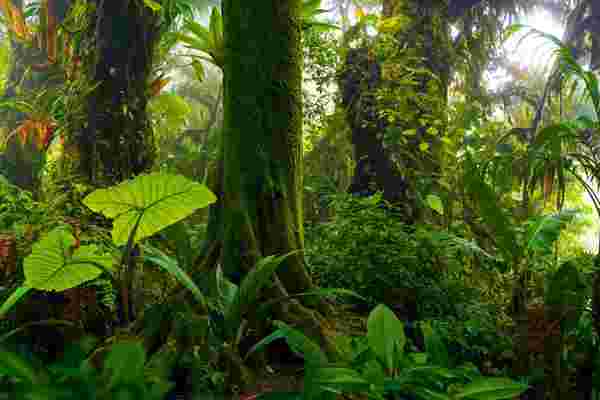
| Habitat and Ecology: | It inhabits the understorey of closed-canopy moist forest, often in lush valley bottoms near water, as well as low secondary growth at forest edges, forest clearings and glades dominated by large herbs, bamboo thickets and the upper forest/moorland ecotone. |
| Systems: | Terrestrial |
| Major Threat(s): | Any decline in the species's population is most likely related to deforestation and forest degradation (Catterall 1992), which are prevalent throughout its range, both for agriculture and for timber, and have increased recently as a result of war. Forest in the Itombwe Mountains and Kahuzi-Biéga National Park is under increasing pressure from pastoralists, farmers, pit-sawyers, miners and hunters (Hall et al. 1998, Omari et al. 1999). Thousands of refugees from Burundi and Rwanda live in camps at the base of Itombwe's eastern escarpment and to the north (Hall et al. 1998, Omari et al. 1999). Clearance of forest for agriculture has increased dramatically in the past few years as maize crops have failed, causing famine (Butynski et al. 1997). There is also some localised forest loss in Itombwe as a result of gold-mining (R. Beyers in litt. 1993). In contrast, reports suggest that there has been been very little encroachment at Nyungwe in recent years, due to the conflict-related emigration of local people (F. Dowsett-Lemaire in litt. 2000). |
| Conservation Actions: |
Conservation Actions Underway The species occurs in protected areas in part of its range, including the Virunga National Park in the DRC, Nyungwe Forest Reserve in Rwanda, and Rwenzori Mountains National Park and Bwindi-Impenetrable National Park in Uganda. A research project on crimson-wings, including this species, is underway at Bwindi Forest (A. Plumptre in litt. 2007, D. Pomeroy in litt 2007), and further fieldwork is planned for Bwindi, Mgahinga Gorilla National Park and Rwenzori Mountains National Park, dependent on funding (E. Meyjes in litt. 2011). Conservation Actions Proposed Conduct surveys to estimate the population size. Carry out regular surveys to monitor population trends. Investigate declines or fluctuations in the population, in order to assess threats. Survey and monitor the extent of habitat. Increase the area of suitable habitat that has protected status. |
| Citation: | BirdLife International 2012. Cryptospiza shelleyi. In: IUCN 2012. IUCN Red List of Threatened Species. Version 2012.2. <www.iucnredlist.org>. Downloaded on 24 May 2013. |
| Disclaimer: | To make use of this information, please check the <Terms of Use>. |
| Feedback: | If you see any errors or have any questions or suggestions on what is shown on this page, please fill in the feedback form so that we can correct or extend the information provided |