


| Kingdom | Phylum | Class | Order | Family |
|---|---|---|---|---|
| ANIMALIA | CHORDATA | AVES | PASSERIFORMES | SITTIDAE |
| Scientific Name: | Sitta victoriae | |||
| Species Authority: | Rippon, 1904 | |||
Common Name/s:
|
||||
| Red List Category & Criteria: | Endangered B1ab(i,ii,iii,v) ver 3.1 | |||||||||||||||
| Year Published: | 2012 | |||||||||||||||
| Assessor/s: | BirdLife International | |||||||||||||||
| Reviewer/s: | Butchart, S. & Symes, A. | |||||||||||||||
| Contributor/s: | Htin Hla, T. | |||||||||||||||
|
Justification: This nuthatch is known from just one small area of mountains, and is likely to have a small population which is declining as a result of habitat degradation, which qualifies it as Endangered. However, if future surveys discover populations in other nearby mountain ranges, it may warrant downlisting to Vulnerable. |
||||||||||||||||
| History: |
|
|||||||||||||||
| Range Description: | Sitta victoriae is only known from the southern Chin Hills of Myanmar. Historical records are all from the Mt Victoria area. There have been recent records from this site where it appears to be scarce, with 14 birds recorded in 1995, five records in a two-week period in April 2000, and 45 sightings during four months of fieldwork in 2001-2002 (Naing 2003). Other sightings include three birds recorded at nearby Mindat in 1995. Recent surveys of the adjacent central Chin Hills failed to find this species, suggesting that it is genuinely restricted to the Mt Victoria range (T. Htin-hla in litt. 2007). |
| Countries: | Native: Myanmar |
| Range Map: | Click here to open the map viewer and explore range. |
| Population: | The population is estimated to number 2,500-9,999 mature individuals based on an assessment of known records, descriptions of abundance and range size. This is consistent with recorded population density estimates for congeners or close relatives with a similar body size, and the fact that only a proportion of the estimated Extent of Occurrence is likely to be occupied. This estimate is equivalent to 3,750-14,999 individuals, rounded here to 3,500-15,000 individuals. |
| Population Trend: |
Decreasing
|
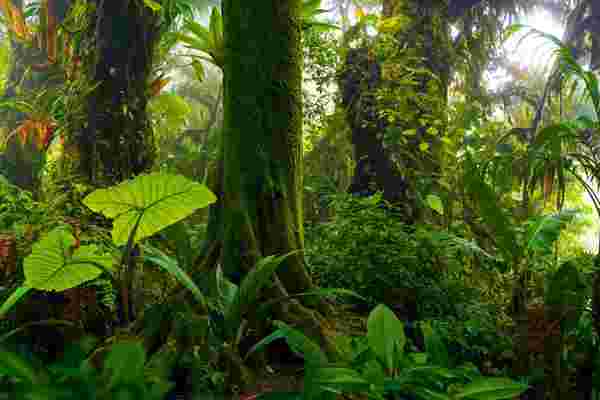
| Habitat and Ecology: | Birds exhibit a preference for oak Quercus semicarpifolia and Rhododendron arboreum forest between 2,300-3,000 m (Naing 2003), feeding in mixed flocks, generally in the outer branches of large trees. It appears to be most common below 2,500 m. |
| Systems: | Terrestrial |
| Major Threat(s): | Forest up to 2,000 m has been almost totally cleared on Mt Victoria and some habitat from 2,000-2,500 m has been heavily degraded, but most above 2,300 m (the species's lower limit) remains secure from logging. The only major threat is slash-and-burn clearance for agriculture, which sometimes reaches these elevations (T. Htin Hla in litt. 2012). |
| Conservation Actions: |
Conservation Actions Underway Mt Victoria falls within Natma Taung National Park, although no management activities have yet been initiated and it is unclear how effective protection is likely to become. Conservation Actions Proposed Conduct surveys in montane forest in the southern Chin Hills to determine the exact range, status and conservation requirements of this species. Lobby for the increased protection and improved management of natural habitat in Natma Taung National Park, particularly at the lower forest fringes occupied by this species. Promote conservation awareness initiatives in Chin Hills communities aimed at reducing habitat loss and fragmentation resulting from shifting cultivation. Enforce regulations on logging, shifting cultivation and hunting within Natma Taung National Park. |
| Citation: | BirdLife International 2012. Sitta victoriae. In: IUCN 2012. IUCN Red List of Threatened Species. Version 2012.2. <www.iucnredlist.org>. Downloaded on 23 May 2013. |
| Disclaimer: | To make use of this information, please check the <Terms of Use>. |
| Feedback: | If you see any errors or have any questions or suggestions on what is shown on this page, please fill in the feedback form so that we can correct or extend the information provided |