


| Kingdom | Phylum | Class | Order | Family |
|---|---|---|---|---|
| ANIMALIA | CHORDATA | AVES | PASSERIFORMES | STURNIDAE |
| Scientific Name: | Fregilupus varius | |||
| Species Authority: | (Boddaert, 1783) | |||
Common Name/s:
|
||||
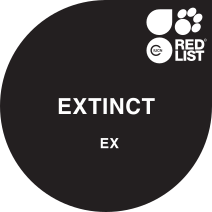
| Red List Category & Criteria: | Extinct ver 3.1 | |||||||||||||||
| Year Published: | 2012 | |||||||||||||||
| Assessor/s: | BirdLife International | |||||||||||||||
| Reviewer/s: | Butchart, S. & Symes, A. | |||||||||||||||
| Contributor/s: | ||||||||||||||||
|
Justification: This species was known from the island of Réunion, but it became Extinct in the 1850s. Introduced disease and various forms of human disturbance are likely to have contributed to its decline. |
||||||||||||||||
| History: |
|
|||||||||||||||
| Range Description: | Fregilupus varius was endemic to Réunion (to France). It was described by most visitors to the island from 1669 onwards, and was apparently common as late as the 1830s (Cheke 1987). However, the last specimen was shot in 1837, and the species became extinct between 1850 and 1860. Nineteen specimens survive (Berger 1957). |
| Countries: | Regionally extinct: Réunion |
| Range Map: | Click here to open the map viewer and explore range. |
| Habitat and Ecology: | Nothing is known, although it is likely to have been a forest species. |
| Systems: | Terrestrial |
| Major Threat(s): | Reasons for its extinction are unclear but may possibly be due to an introduced disease, combined with changing population pressure due to the emancipation of slaves in 1848, forest fires, drought and deforestation (Cheke 1987). It has been described as tame and easy to knock down with sticks, so hunting may have also played a part. |
| Citation: | BirdLife International 2012. Fregilupus varius. In: IUCN 2012. IUCN Red List of Threatened Species. Version 2012.2. <www.iucnredlist.org>. Downloaded on 24 May 2013. |
| Disclaimer: | To make use of this information, please check the <Terms of Use>. |
| Feedback: | If you see any errors or have any questions or suggestions on what is shown on this page, please fill in the feedback form so that we can correct or extend the information provided |