


| Kingdom | Phylum | Class | Order | Family |
|---|---|---|---|---|
| ANIMALIA | CHORDATA | AVES | PASSERIFORMES | STURNIDAE |
| Scientific Name: | Aplonis cinerascens | |||
| Species Authority: | Hartlaub & Finsch, 1871 | |||
Common Name/s:
|
||||
| Red List Category & Criteria: | Vulnerable D1+2 ver 3.1 | ||||||||||||||||||
| Year Published: | 2012 | ||||||||||||||||||
| Assessor/s: | BirdLife International | ||||||||||||||||||
| Reviewer/s: | Butchart, S. & Symes, A. | ||||||||||||||||||
| Contributor/s: | Dutson, G., McCormack, G. & Tiraa, A. | ||||||||||||||||||
|
Justification: This species qualifies as Vulnerable because it has a very small population and is confined to just one tiny island. Any indication of a decline would warrant uplisting the species to a higher threat category. |
|||||||||||||||||||
| History: |
|
||||||||||||||||||
| Range Description: | This species occurs in the rugged interior of Rarotonga, Cook Islands. It was regarded as abundant early in the 19th century and still not uncommon in 1973, but estimates made in 1984 put the population at 100 birds (Hay 1986) and 1,000-3,000 birds (Holyoak and Thibault 1984). The population was later estimated at c.500 individuals (McCormack 1997), although some observers consider it may be more than this (G. McCormack in litt 2007). More recently, the population has been estimated at 1,200 individuals in 2010 (based on a detailed survey of one location and extrapolating to suitable habitat [Tiraa 2010]) and 2,350 individuals in 2011 (based on distance sampling in nine inland valleys [Easby 2011]). It is likely to have been lost from the lowlands in the last 40 years and, although the population is assumed now to be stable, it could be declining undetected (SPREP 1999). It was reported to be relatively localised and not evenly distributed in the latest survey (Easby 2011). |
| Countries: | Native: Cook Islands |
| Range Map: | Click here to open the map viewer and explore range. |
| Population: | Latest population estimates range from 1,200 (Tiraa 2010) to 2,350 individuals (Easby 2011) and so the population is placed in the band 1,000-2,499 individuals. This equates to 667-1,666 mature individuals, rounded here to 600-1,700 mature individuals. |
| Population Trend: |
Stable
|
| Habitat and Ecology: |
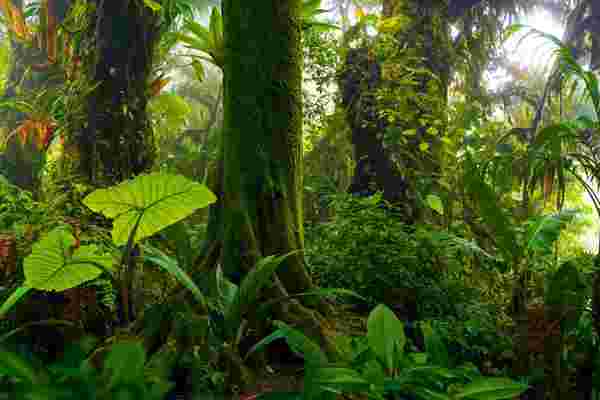
This is a shy and inconspicuous inhabitant of undisturbed, native montane forest and fringing disturbed forest(Pratt et al. 1987) from 150-200 m up to the highest areas of the island at 600 m (Holyoak and Thibault 1984). Although a recent survey indicated that they also frequent areas as low as 30 m (A. Tiraa in litt. 2003) they no longer seem to frequent coastal areas as much as they did in the past (A. Tiraa in litt. 2003). It is found either alone or in pairs, foraging in the canopy (Pratt et al. 1987) and appears to have a varied diet, feeding on nectar, fruit and insects (Holyoak and Thibault 1984). A nest has been observed in the cavity of an old tree (Holyoak and Thibault 1984), and birds seem to prefer to nest in native trees such as koka Bischofia javanica, mato Homalium acuminatum and turina Hernandia moerenhoutiana(A. Tiraa in litt. 2007). Surveys have reported that valleys of low starling abundance have high proportions of hibiscus Hibiscus tiliaceus and lack suitable vegetation for food and nesting, such as the Rarotonga fitchia Fitchia speciosa and Polynesian chestnut Inocarpus fagifer (Easby 2011). This species lays more than one egg per clutch, uses the same nest in subsequent years, breeds between August and December and holds territories (A. Tiraa in litt. 2003). |
| Systems: | Terrestrial |
| Major Threat(s): | The introduced Common Myna Acridotheres tristis is aggressive and widespread and is often blamed for the demise of the native landbirds (McCormack 1997). It may be implicated in the loss of this species from the lowlands, but it is not thought to have penetrated the forested uplands (A. Tiraa in litt. 2003, G. McCormack in litt 2007). Black rats Rattus rattus may reduce nesting success or take incubating birds in the uplands, although their effect is likely to be negligible (G. McCormack in litt 2007). The introduction of exotic avian diseases, to which local birds have no immunity, is another possible threat (McCormack 1997). Other Aplonis spp. have become extinct or exceedingly rare for unknown reasons (G. Dutson in litt. 2007) and so monitoring of the species is required. This species is potentially susceptible to climate change (BirdLife International unpublished data) since it has a distribution that is close to the maximum altitude within its range. |
| Conservation Actions: |
Conservation Actions Underway The species presumably benefits from conservation measures carried out for the Rarotonga Flycatcher Pomarea dimidiata (classified as Endangered) in the south-east of the island, including intensive rat control. Recent surveys have provided more precise population size estimates. Conservation Actions Proposed Investigate possible threats. Ensure the protection of an area of upland forest. Control R. rattus and A. tristis in key sites. |
| Citation: | BirdLife International 2012. Aplonis cinerascens. In: IUCN 2012. IUCN Red List of Threatened Species. Version 2012.2. <www.iucnredlist.org>. Downloaded on 18 May 2013. |
| Disclaimer: | To make use of this information, please check the <Terms of Use>. |
| Feedback: | If you see any errors or have any questions or suggestions on what is shown on this page, please fill in the feedback form so that we can correct or extend the information provided |