
Map_thumbnail_large_font

Laniarius amboimensis

Status_ne_offStatus_dd_offStatus_lc_offStatus_nt_offStatus_vu_offStatus_en_onStatus_cr_offStatus_ew_offStatus_ex_off

Taxonomy [top]

Kingdom Phylum Class Order Family
ANIMALIA CHORDATA AVES PASSERIFORMES MALACONOTIDAE

Scientific Name: Laniarius amboimensis
Species Authority: Moltoni, 1932
Common Name/s:
English Gabela Bushshrike, Gabela Bush-shrike
Taxonomic Notes: Laniarius luehderi, L. brauni and L. amboimensis (Sibley and Monroe 1990, 1993) are retained as separate species contra Dowsett and Forbes-Watson (1993) who include brauni and amboimensis as subspecies of L. luehderi.

Assessment Information [top]

Red List Category & Criteria: Endangered C2a(i) ver 3.1
Year Published: 2012
Assessor/s: BirdLife International
Reviewer/s: Butchart, S. & Symes, A.
Contributor/s: Dean, R., Mills, M., Olmos, F. & Vaz Pinto, P.
Justification:
This poorly known species is listed as Endangered because it is thought to have a very small population, which is suspected to be in decline owing to continued habitat loss and degradation.

History:
2008 Endangered
2004 Endangered
2000 Endangered
1996 Endangered
1994 Endangered

Geographic Range [top]

Range Description: Laniarius amboimensis was formerly known only from a restricted area around Gabela on the escarpment zone of Angola (Dean 2000); however, surveys conducted in 2005 have extended its known range (Mills 2010). After 1960 there were no records until single pairs were found twice in three days in September 1992, in mixed-species flocks. In 2003, it was found to be common in thickets in secondary forest and primary forest at Kumbira, and heard in forest near the Sumbe-Gabela road (Ryan et al. 2004). In January 2004, the species was recorded in Kumbira Forest and by a nearby road (Sekercioðlu and Riley 2005). During surveys conducted in 2005, it was recorded c.30 km north of Gabela and as far south Gungo (Mills 2010). There is also a specimen at Lubango Museum from Egito, Benguella (Mills 2010). The species is judged to be uncommon, and its population is estimated to include fewer than 1,000 mature individuals; however, this may be overly conservative and further surveys are required.

Countries:
Native:
Angola (Angola)
Range Map: Click here to open the map viewer and explore range.

Population [top]

Population: The population is estimated at 350-980 individuals (2.5-7 individuals/km2 x 140 km2 [45% EOO]), i.e. within the band 250-999 mature individuals. This equates to 375-1,499 individuals in total, rounded here to 350-1,500 individuals. Density range is up to the lower quartile of nine estimates for seven congeners in the BirdLife Population Density Spreadsheet.
Population Trend: Decreasing

Habitat and Ecology [top]

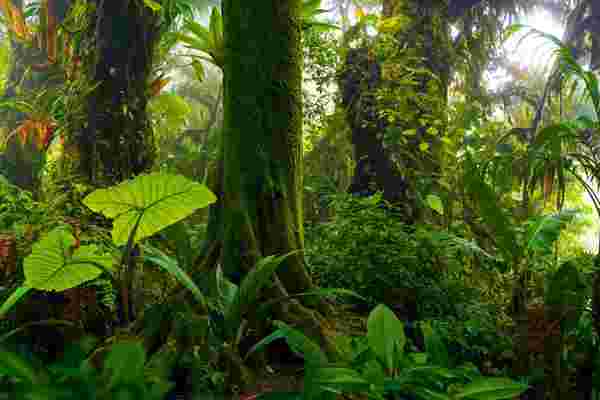
Habitat and Ecology: It is found in the undergrowth of drier evergreen forest above 730 m, and shows some tolerance of habitat modification, having been recorded in overgrown coffee plantations (Mills 2010) and secondary thicket with dense understorey and lower canopy vegetation (Sekercioðlu and Riley 2005, Mills 2010).

Systems: Terrestrial

Threats [top]

Major Threat(s): It is threatened by habitat loss through the encroachment of subsistence and slash-and-burn agriculture (Sekercioðlu and Riley 2005, Mills 2010), which has been estimated to possibly affect 30% of forest in the Kumbira area (Sekercioðlu and Riley 2005). In some areas, 20-70% of canopy trees and all the undergrowth in valley bottoms is being cleared to plant bananas and sweet potatoes (Dean 2001). The removal of the all understorey vegetation renders habitat completely unsuitable for the species (Mills 2010). In other areas, up to 95% of the forest canopy has been removed to plant cassava and maize (Dean 2001). The cultivation of manioc and maize is now very prevalent within the species's range (F. Olmos in litt. 2011). Since the 1930s, shaded coffee plantations have been developed in the forests of the escarpment (Sekercioðlu and Riley 2005). With the return of peace, commercial activities on the Angolan escarpment (such as coffee growing) (Sinclair et al. 2004) are expected to resume (Mills et al. 2004). The marketing of local produce is currently limited by the poor state of the Sumbe-Gabela road (Ryan et al. 2004). However, this is a priority for reconstruction, which would contribute to increased development and agriculture in the area (Ryan et al. 2004). Most of Kumbira Forest was selectively logged before the civil war (Sinclair et al. 2004) and, although there is no evidence of on-going logging, the forest continues to be a source of firewood (Sekercioðlu and Riley 2005). Current activities such as selective logging and shaded coffee-gowing may not seriously threaten the species, as it is tolerant of fairly degraded habitats (Ryan et al. 2004, Mills 2010).

Conservation Actions [top]

Conservation Actions: Conservation Actions Underway
A protected area of 50 km2 was recommended for the area in the early 1970s (Dean 2001), but this has not been established, and the possibility of protecting any habitat for the species by c.2017 is judged to be very uncertain (M. Mills in litt. 2012).

Conservation Actions Proposed
Conduct further surveys to determine its distribution and population size. Study the species's habitat requirements. Designate protected areas to safeguard suitable habitat. Implement a conservation strategy for the Angolan escarpment in reaction to the resumption of commercial activities (Mills et al. 2004). Promote ecotourism as a viable supplement to agriculture (Sinclair et al. 2004). Preserve Kumbira Forest through official protection and community-based conservation (Sekercioðlu and Riley 2005).

Citation: BirdLife International 2012. Laniarius amboimensis. In: IUCN 2012. IUCN Red List of Threatened Species. Version 2012.2. <www.iucnredlist.org>. Downloaded on 24 May 2013.
Disclaimer: To make use of this information, please check the <Terms of Use>.
Feedback: If you see any errors or have any questions or suggestions on what is shown on this page, please fill in the feedback form so that we can correct or extend the information provided