

Map_thumbnail_large_font

Phylloscartes ceciliae

Status_ne_offStatus_dd_offStatus_lc_offStatus_nt_offStatus_vu_offStatus_en_onStatus_cr_offStatus_ew_offStatus_ex_off

Taxonomy [top]

Kingdom Phylum Class Order Family
ANIMALIA CHORDATA AVES PASSERIFORMES TYRANNIDAE

Scientific Name: Phylloscartes ceciliae
Species Authority: Teixeira, 1987
Common Name/s:
English Alagoas Tyrannulet, Long-tailed Tyrannulet

Assessment Information [top]

Red List Category & Criteria: Endangered B1ab(i,ii,iii,v);C2a(ii) ver 3.1
Year Published: 2012
Assessor/s: BirdLife International
Reviewer/s: Butchart, S. & Symes, A.
Contributor/s: Goerck, J., Roda, S. & Whittaker, A.
Justification:
This species is known from ten locations within a very small, severely fragmented and declining range, and it is suspected to have a small and rapidly declining population. It consequently qualifies as Endangered.

History:
2008 Endangered
2004 Endangered
2000 Critically Endangered
1996 Endangered
1994 Endangered

Geographic Range [top]

Range Description: Phylloscartes ceciliae is known from ten localities in Alagoas and Pernambuco states, north-east Brazil. It was discovered at Murici in 1983 and subsequently found at Pedra Talhada in 1987. Forest patches at both these sites are extremely small and severely fragmented. It has since been found at Pedra Branca, Frei Caneca/Pedra Dantas, Brejo dos Cavalos, Mato do Estado, Agua Azul and Gravatá in Pernambuco, and at Quebrângulo and Mata do Engenho Coimbra in Alagoas. At Pedra Branca, it was considered rather common, but 15 days of observations between 1996-1999 found the species on only three occasions (A. Whittaker in litt. 1999).

Countries:
Native:
Brazil
Range Map: Click here to open the map viewer and explore range.

Population [top]

Population: The population is estimated to number 250-999 mature individuals based on an assessment of known records, descriptions of abundance and range size. This is consistent with recorded population density estimates for congeners or close relatives with a similar body size, and the fact that only a proportion of the estimated Extent of Occurrence is likely to be occupied. This estimate is equivalent to 375-1,499 individuals in total, rounded here to 350-1,500 individuals.
Population Trend: Decreasing

Habitat and Ecology [top]

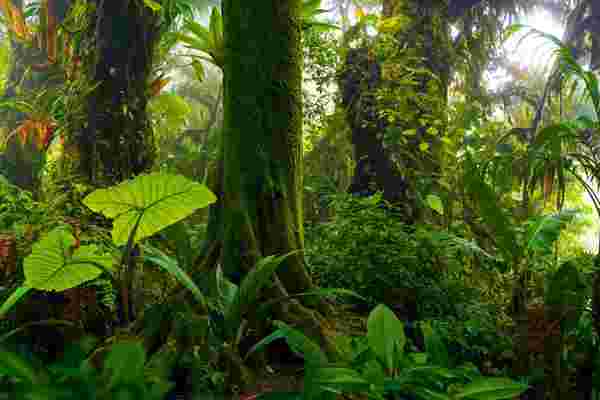
Habitat and Ecology: It occurs in upland humid forest at 400-550 m, often joining mixed-species flocks in the mid-storey and subcanopy, 6-15 m above ground. The diet consists of small insects taken from the surface of leaves and branches. Breeding is likely to take place from September to February. A nest was found in a rather open area in 1990.

Systems: Terrestrial

Threats [top]

Major Threat(s): There has been massive clearance of Atlantic forest in Alagoas, largely as a result of logging and conversion to sugarcane plantations and pastureland. Forest at Murici has been reduced from 70 km2 in the 1970s, to a mere 30 km2 of highly disturbed and fragmented habitat in 1999 (J. M. Goerck in litt. 1999). The site is severely threatened by fires spreading from adjacent plantations, and further logging with new roads were evident in January 1999 (J. M. Goerck in litt. 1999; A. Whittaker in litt. 1999).

Conservation Actions [top]

Conservation Actions: Conservation Actions Underway
It is protected under Brazilian law and occurs in Pedra Talhada Biological Reserve, where significant areas are being reforested with native trees (A. Studer per A. Whittaker in litt. 1999). Protection at this reserve is enforced by guards and apparently welcomed by local communities (A. Studer per A. Whittaker in litt. 1999). Land at Murici remains privately-owned and a number of conservation initiatives have so far failed to halt forest loss (J. M. Goerck in litt. 1999). Recently also recorded at Reserva Privada do Patrimônio Natural Frei Caneca (630 ha) in Pernambuco (Cotinga 2003).

Conservation Actions Proposed
Survey sites with any remnant patches of habitat in Alagoas (such as Usina Serra Grande) and Pernambuco. Designate Murici as a biological reserve and ensure its de facto protection. Continue the reforestation programme and de facto protection at Pedra Talhada. Designate Mata do Estado and Pedra Dantas as protected areas (S. Roda in litt. 2007).

Citation: BirdLife International 2012. Phylloscartes ceciliae. In: IUCN 2012. IUCN Red List of Threatened Species. Version 2012.2. <www.iucnredlist.org>. Downloaded on 21 May 2013.
Disclaimer: To make use of this information, please check the <Terms of Use>.
Feedback: If you see any errors or have any questions or suggestions on what is shown on this page, please fill in the feedback form so that we can correct or extend the information provided