


| Kingdom | Phylum | Class | Order | Family |
|---|---|---|---|---|
| ANIMALIA | CHORDATA | AVES | PSITTACIFORMES | PSITTACIDAE |
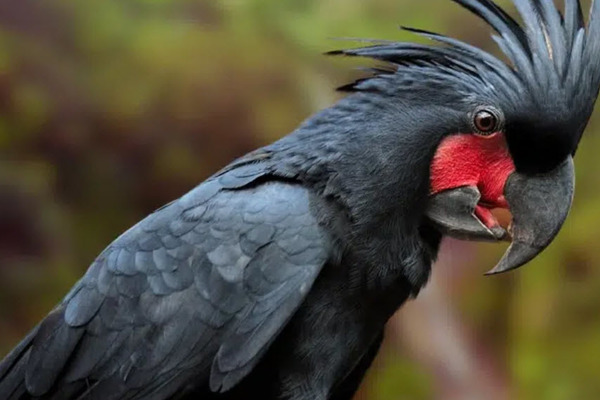
| Scientific Name: | Cacatua goffiniana | ||||||
| Species Authority: | (Finsch, 1863) | ||||||
Common Name/s:
|
|||||||
| Taxonomic Notes: | Spelling of specific name follows Roselaar and Michels (2004). | ||||||
| Red List Category & Criteria: | Near Threatened ver 3.1 | ||||||
| Year Published: | 2012 | ||||||
| Assessor/s: | BirdLife International | ||||||
| Reviewer/s: | Butchart, S. & Symes, A. | ||||||
| Contributor/s: | |||||||
|
Justification: This species has a very small range, but its population is not severely fragmented or restricted to a few locations. Despite suffering heavy trapping pressure it appears to have maintained a large population. However, habitat degradation, continued trapping and persecution are likely to be causing a moderately rapid population reduction and it therefore qualifies as Near Threatened. |
|||||||
| History: |
|
||||||
| Range Description: | Cacatua goffiniana is restricted to the Banda Sea Islands of Yamdena and Larat (Tanimbar) with an introduced population on Kai, Indonesia. In the 1980s the numbers of birds entering trade annually exceeded 10,000 in some years and there were fears for its security, but the total population is estimated to number 300,000-400,000 individuals. |
| Countries: |
Native: IndonesiaIntroduced: Puerto Rico; Singapore |
| Range Map: | Click here to open the map viewer and explore range. |
| Population: | The global population has been estimated to number c.100,000-499,999 (BirdLife International 2001), while the population in Taiwan has been estimated at < c.100 introduced breeding pairs (Brazil 2009). |
| Population Trend: |
Decreasing
|
| Habitat and Ecology: | It inhabits forest and agricultural land, feeding on maize crops and roosting in the forest. |
| Systems: | Terrestrial |
| Major Threat(s): | Habitat loss continues apace in the south of Yamdena and this, combined with continued trapping, must be producing a decline. It may be persecuted as a crop pest or hunted for food in some areas. |
| Conservation Actions: |
Conservation Actions Underway CITES Appendix I (1992). Conservation Actions Proposed Regularly monitor at certain sites throughout its range to determine population trends. Investigate the extent of trapping and persecution and take appropriate measures, including the use of awareness campaigns, to address these issues. Protect significant areas of suitable forest on all islands where it occurs. |
| Citation: | BirdLife International 2012. Cacatua goffiniana. In: IUCN 2012. IUCN Red List of Threatened Species. Version 2012.2. <www.iucnredlist.org>. Downloaded on 22 May 2013. |
| Disclaimer: | To make use of this information, please check the <Terms of Use>. |
| Feedback: | If you see any errors or have any questions or suggestions on what is shown on this page, please fill in the feedback form so that we can correct or extend the information provided |