


| Kingdom | Phylum | Class | Order | Family |
|---|---|---|---|---|
| ANIMALIA | CHORDATA | AVES | PSITTACIFORMES | PSITTACIDAE |
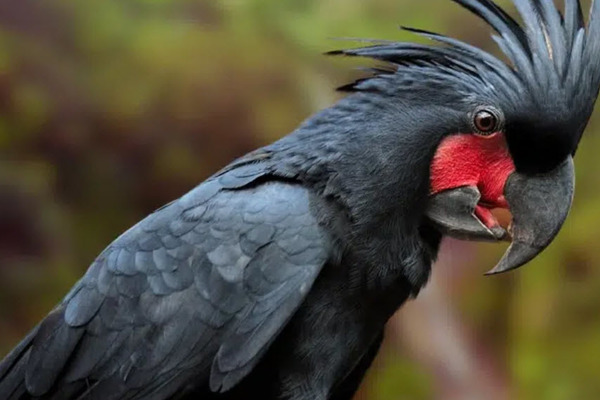
| Scientific Name: | Probosciger aterrimus | ||||||
| Species Authority: | (Gmelin, 1788) | ||||||
Common Name/s:
|
|||||||
| Red List Category & Criteria: | Least Concern ver 3.1 | |||||||||
| Year Published: | 2012 | |||||||||
| Assessor/s: | BirdLife International | |||||||||
| Reviewer/s: | Butchart, S. & Symes, A. | |||||||||
| Contributor/s: | ||||||||||
|
Justification: This species has a very large range, and hence does not approach the thresholds for Vulnerable under the range size criterion (Extent of Occurrence <20,000 km2 combined with a declining or fluctuating range size, habitat extent/quality, or population size and a small number of locations or severe fragmentation). Despite the fact that the population trend appears to be decreasing, the decline is not believed to be sufficiently rapid to approach the thresholds for Vulnerable under the population trend criterion (>30% decline over ten years or three generations). The population size has not been quantified, but it is not believed to approach the thresholds for Vulnerable under the population size criterion (<10,000 mature individuals with a continuing decline estimated to be >10% in ten years or three generations, or with a specified population structure). For these reasons the species is evaluated as Least Concern. |
||||||||||
| History: |
|
|||||||||
| Range Description: | This species is found in Australia and New Guinea (Indonesia and Papua New Guinea). In Australia, subspecies macgillivrayi is confined to the northern Cape York Peninsula, from Pormpuraaw on the west coast to Princess Charlotte Bay on the east. In New Guinea, it is widespread and tolerant of degraded forest habitats, mostly in the lowlands and foothills but occasionally up to 1,350 m. |
| Countries: | Native: Australia; Indonesia; Papua New Guinea |
| Range Map: | Click here to open the map viewer and explore range. |
| Population: | The global population size has not been quantified, but the species is still recorded relatively commonly and appears to have a large overall population. The subspecies macgillivrayi is believed to have a stable population of c.3,000 individuals. |
| Population Trend: |
Decreasing
|
| Systems: | Terrestrial |
| Major Threat(s): | In some parts of its range, the woodland habitat in which hollow trees occur is being invaded by rainforest. The fire which maintains the rainforest/woodland ecotone also has the potential to reduce hollow availability if managed incorrectly, particularly where rainforest is stable or contracting (Garnett and Crowley 2000). |
| Citation: | BirdLife International 2012. Probosciger aterrimus. In: IUCN 2012. IUCN Red List of Threatened Species. Version 2012.2. <www.iucnredlist.org>. Downloaded on 24 May 2013. |
| Disclaimer: | To make use of this information, please check the <Terms of Use>. |
| Feedback: | If you see any errors or have any questions or suggestions on what is shown on this page, please fill in the feedback form so that we can correct or extend the information provided |