


| Kingdom | Phylum | Class | Order | Family |
|---|---|---|---|---|
| ANIMALIA | CHORDATA | AVES | CUCULIFORMES | CUCULIDAE |
| Scientific Name: | Centropus chlororhynchus | |||
| Species Authority: | Blyth, 1849 | |||
Common Name/s:
|
||||
| Red List Category & Criteria: | Vulnerable B1ab(i,ii,iii,iv,v);C2a(i) ver 3.1 | |||||||||||||||
| Year Published: | 2012 | |||||||||||||||
| Assessor/s: | BirdLife International | |||||||||||||||
| Reviewer/s: | Butchart, S. & Symes, A. | |||||||||||||||
| Contributor/s: | de Silva Wijeyeratne, G. | |||||||||||||||
|
Justification: This coucal's population and range are small, declining and severely fragmented as a result of the destruction and degradation of humid forest. It therefore qualifies as Vulnerable. |
||||||||||||||||
| History: |
|
|||||||||||||||
| Range Description: | Centropus chlorohynchus is endemic to Sri Lanka, where it is confined to the wet zone in the south-west of the island (BirdLife International 2001). Its population is poorly known, but appears to have declined and become increasingly fragmented since the late 19th and early 20th century, and it is absent from some sites where it formerly occurred. It is unlikely that its population exceeds a few thousand individuals. |
| Countries: | Native: Sri Lanka |
| Range Map: | Click here to open the map viewer and explore range. |
| Population: | The population is unlikely to number more than a few thousand individuals, based on available records and survey results, thus there are assumed to be fewer than 10,000 mature individuals. It is placed in the band 2,500-9,999 mature individuals. This equates to 3,750-14,999 individuals in total, rounded here to 3,500-15,000 individuals. |
| Population Trend: |
Decreasing
|
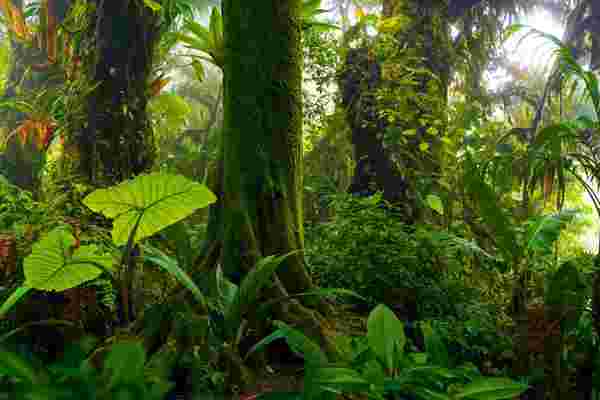
| Habitat and Ecology: | It is found in high-stature, undisturbed, wet zone forests with a dense understorey (often of bamboo) mainly below 760 m. There are a few records from human-modified habitats surrounded by forest but it appears generally intolerant of habitat modification. It will use forest corridors to move between good quality habitat patches but many of these have been cleared. It feeds on a wide variety of invertebrates and also frogs, lizards and fruit, and is thought to breed from January-July, and possibly at other times of year. |
| Systems: | Terrestrial |
| Major Threat(s): | The main threat is the extensive clearance and degradation of forests, particularly in the wet zone, through logging, fuelwood-collection, conversion to agriculture and tree plantations, gem mining, settlement and fire. Some protected forests continue to be degraded and suffer further fragmentation, for example Ingiriya Forest Reseve, where it is declining because of illegal logging. Competition with Greater Coucal C. sinensis, which occurs in logged and disturbed areas, may be contributing to its decline. |
| Conservation Actions: |
Conservation Actions Underway It is legally protected in Sri Lanka, and a moratorium was passed in 1990 to protect wet zone forests from logging. It occurs in several national parks and forest reserves, most notably Sinharaja National Heritage Wilderness Area. A survey of the biodiversity of 200 forest sites was carried out during 1991-1996. Conservation Actions Proposed Research its distribution, abundance and ecology, in particular to improve understanding of its habitat requirements and to identify appropriate forest-management regimes. Research the possible effects of competition with C. sinensis. Maintain the current ban on the logging of wet zone forests. Encourage protection of remaining important areas of forest holding this and other threatened species, including proposals to designate conservation forests, and ensure their effective management. Promote programmes to create awareness of the value of biological resources amongst local communities. |
| Citation: | BirdLife International 2012. Centropus chlororhynchus. In: IUCN 2012. IUCN Red List of Threatened Species. Version 2012.2. <www.iucnredlist.org>. Downloaded on 18 May 2013. |
| Disclaimer: | To make use of this information, please check the <Terms of Use>. |
| Feedback: | If you see any errors or have any questions or suggestions on what is shown on this page, please fill in the feedback form so that we can correct or extend the information provided |